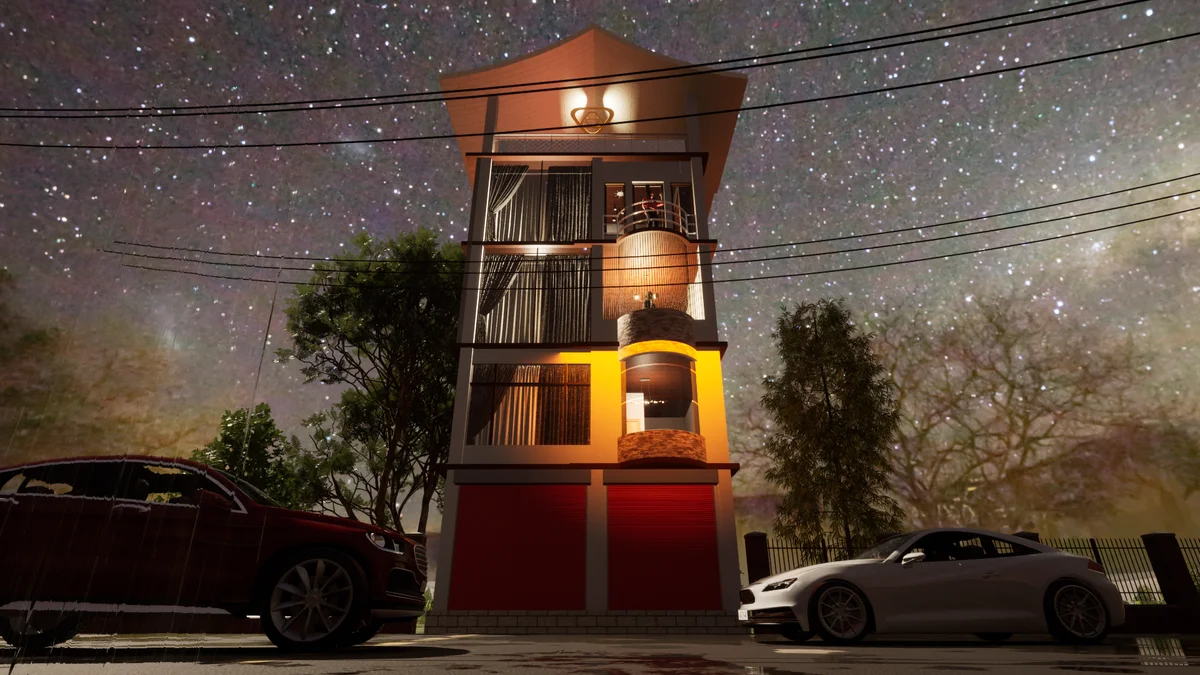
Building Your Dream Home in the Hills: A Complete Guide to Gram Panchayat Building Approvals in Darjeeling and Kalimpong
Waking up to the misty mountain views, terraced green slopes, and serene environs of Darjeeling and Kalimpong is a dream come true for many property owners. However, before you break ground on your hill sanctuary, navigating the legal maze of Gram Panchayat (GP) building plan approvals is essential.
Because both districts feature fragile Himalayan topography, seismic sensitivity, and strict environmental parameters, building a house here—especially a multi-story structure like a G+2 or higher—requires strict compliance with regional administrative rules.
This comprehensive guide breaks down the clearance process, area thresholds, and multi-tier routing specific to the hill regions of Darjeeling and Kalimpong.
1. Initial Legal & Geographical Checkpoints
Before hiring an engineer or purchasing construction materials, ensure your project complies with baseline hill frameworks:
Land Title & Conversion: You must possess clear, undisputed title deeds (Sale Deed, Gift Deed, or Record of Rights/Porcha) and up-to-date hill land tax receipts (Khajna). If the plot is historically agricultural, verify its legal status.
Jurisdiction Verification: Confirm that your plot falls strictly under a Gram Panchayat and not inside a notified Municipality, Cantonment Board, or under the planning jurisdiction of development bodies like the SJDA or GTA, which follow separate guidelines.
Hills Topography & Environmental Safety: Darjeeling and Kalimpong have fragile eco-zones. Construction too close to natural mountain streams (jhoras), protected forest buffer zones, or steep landslide-prone slopes faces intensive restrictions or outright bans.
2. Area and Height Thresholds: Who Approves What?
Under the West Bengal Panchayat (Gram Panchayat Administration) Rules, building permissions are strictly categorized based on your plinth footprint area and total building height. Because local GPs can only clear minor footprints, plans are routed across administrative tiers:
Approval Level | Competent Authority | Plinth Area Limits | Height Limits | Description & Scope |
Gram Panchayat Level | Gram Panchayat (Pradhan & Executive Body) | Up to 150 sq. meters (approx. 1,615 sq. ft.) | Up to 6.5 meters | Minor structures, traditional single-floor rural dwellings. |
Block Level | Panchayat Samiti Engineering Cell | Up to 300 sq. meters (approx. 3,229 sq. ft.) | Up to 6.5 meters | Mid-sized residential homes; GP forwards files here if they cross local limits. |
District Level | Darjeeling / Kalimpong Zilla Parishad (GTA) | Above 300 sq. meters | Up to 15 meters | Larger residential blocks, multi-unit spaces, or commercial structures. |
State Level | P&RD Department / State Committees | Large footprints | Above 15 meters | High-rise structures exceeding 15 meters require specialized state-level clearances. |
3. Special Rules for G+2 and Multi-Story Buildings in the Hills
Planning a G+2 building (Ground floor + 2 upper floors) means instantly crossing standard Gram Panchayat height and footprint limitations. Consequently, multi-story hill construction triggers rigorous structural rules:
Mandatory Forwarding and Vetting: Local panchayats cannot autonomously approve G+2 plans. Your local GP will receive your application, verify land ownership, and forward it upward to the Panchayat Samiti (Block Level) or Zilla Parishad (District Level) for structural engineering vetting.
Soil Testing and Structural Stability: Given the seismic vulnerability of the region, a professional soil investigation report and structural safety designs certified by a recognized, licensed structural engineer are compulsory.
Retaining Walls and Drainage Layouts: Building plans must explicitly feature engineered plans for retaining walls (to stabilize terraced hill cuts) and proper stormwater drainage channels to prevent monsoon runoff from eroding neighboring plots.
Setbacks & Open Spaces: Residential building rules mandate that at least one-third (33.3%) of your total plot area must remain completely open (unused for construction) to serve as front, side, and rear setbacks.
Approach Road Width: Hill roads are narrow. Local authorities cross-examine whether your approach path is wide enough to support multi-story loads and allow emergency vehicle passage.
4. Step-by-Step Approval Process
Drafting Blueprints: Hire a licensed architect, civil engineer, or surveyor well-versed in hill terrain mechanics to draft your Site Plan and Building Plan in triplicate, detailing load paths, retaining walls, and drainage outlets.
Application Submission: Submit your application package (using Form 4 under Panchayat rules) at your local Gram Panchayat office along with your land deeds, identity proof, tax receipts, and blueprints. Pay the required processing fees and secure your official acknowledgment receipt.
Field Inspection: The Pradhan, executive members, or an authorized block engineer will visit your property to inspect boundaries, slope gradients, and access roads.
Vetting Escalation: Because a G+2 design crosses standard GP limits, the file is moved to the Block or District engineering cell for structural vetting.
Final Sanction Issuance: Once the technical cell clears the structural safety and drawings, the Gram Panchayat issues the formal permit and hands over your stamped, approved blueprint.
Pro-Tips for Hill Builders
Avoid Jhoras: Never purchase plots or attempt construction near natural hill streams (jhoras), as environmental clearances are notoriously difficult to clear.
Keep Documents Updated: Ensure your land tax (Khajna) is paid up to the current year before applying.
Check Local BDO Updates: Always drop by your local Block Development Office (BDO) before finalizing your blueprints to check for any updated regional single-window portal directives or localized hill-building advisories.
By securing proper approvals and respecting the delicate terrain of Darjeeling and Kalimpong, you protect your investment and ensure the long-term safety of your home and community!
Are you planning a residential project or a multi-story build in a specific block across Darjeeling or Kalimpong?